



I got to know Jillian through her husband Kin, who I have known for years. Jillian is a third culture kid, who grew up in Australia and Indonesia as a child, followed by nine years in New York. Then next up was Hong Kong, where she met her husband, who convinced her to move to Singapore.
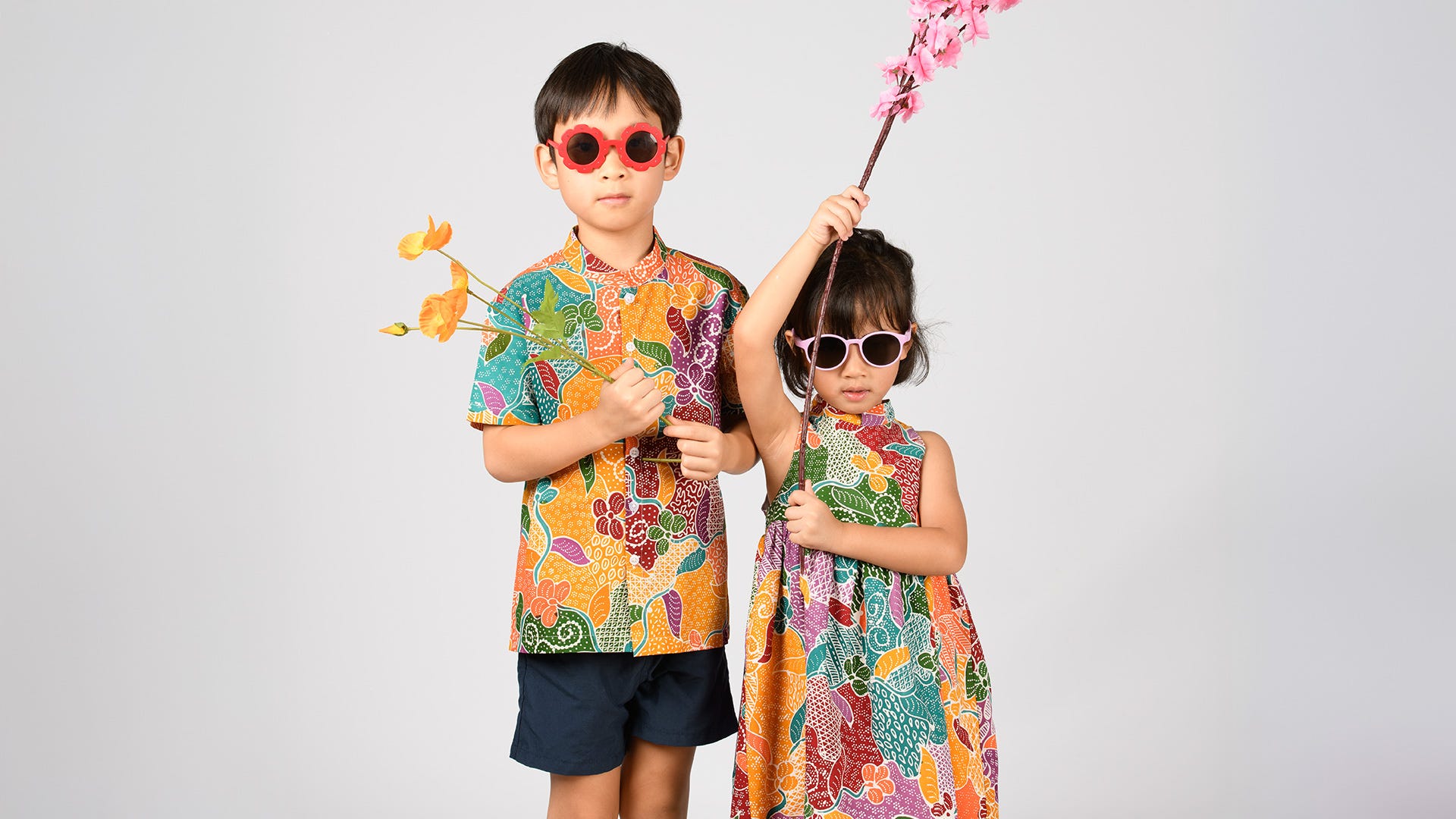
Two years ago, she started her own batik kidswear brand, Dots and Dribble, which she created from scratch. From the brand work, the designs, the sourcing trips to Indonesia, she does it all while raising two young kids in Singapore. Jillian has mentioned that “starting this store was also a way for my kids to connect with their Indonesian and Malaysian heritage.”
(I should mention I’m a customer. I buy her batik for my kids, and her batik painting kits too, because I love her tasteful designs and my kids are happy to wear them as well!)
Third culture kids often have a complicated relationship with the question of where they are from. Their roots are made up of many places, none of them fully. After a life of moving, Jillian is doing the work of rooting, and I think many of us feel this more urgently with children. She is giving her two children a thread back to where she and Kin came from. She is also making something personal and beautiful for them.
I’ll let you read the rest of the conversation.
Who you are
Tell us a little about yourself: your work, your family, and where you are right now in both.
I’m Jillian. I always knew I wanted to do something creative. After art school in New York, I worked in digital agencies for a decade, but when I took a break to be more present with the kids, I realised I wanted to make something that was entirely mine. Two years ago, I started Dots and Dribble, an online store specialising in batik kidswear. It was a way to blend my design background with my kids’ heritage—and it’s been a whole learning process.
How old are your children, and who is the primary caregiver at home?
My kids are seven and four, and I’m the primary caregiver. My husband’s work involves quite a bit of travel and client dinners, so he pitches in when he can. We also have a wonderful helper who assists with cleaning, cooking, and childcare.
How you think
Was there one thing that made you change after becoming a parent?
You’re always split. In school, anything less than an A is a failure. As a parent, I’ve had to unlearn that getting C’s across everything like work, kids, myself beats an A in one thing and nothing else.
Was there a moment after having children when you looked at your career and thought, this needs to change? What happened next?
I was one month into a new job when I found out I was pregnant. Hiding it while feeling sick at a job I hated was miserable. But it made me ask: why am I doing this to myself just so my employer doesn’t feel bad? I quit six months later. I was privileged to have options such as my partner’s support and the ability to freelance again. At that point the realization was clear: I couldn’t keep sacrificing my family for a job I didn’t love.
Tell me about a moment when you felt the tension between work and being present most acutely. Not the general feeling, but a specific moment you still think about.
Parenting made me examine my people-pleasing. My dream job at an ad agency came at ten months postpartum. Working until 1–2am, waking at 3am with a baby, then starting at 7am wasn’t sustainable. Nobody talks about this. I was up at 2am sweating, stressed and miserable, wondering why. Then I looked around: no mothers in core roles. During COVID, with everything falling apart and still pitching, it was clear I had no future there. I had to leave.
How has your parenting philosophy evolved, with age, with experience, or with each subsequent child if you have more than one?
I realised how neurotic I am as a parent. Before kids, I was a go-with-the-flow type of person, but parenting changed that completely. I am not a planner but having kids is 90% logistics and 10% the craziness that comes with it. A set schedule with an early bedtime allows both the children and me to thrive. With my second child, I had less time to be neurotic and just aimed to enjoy the chaos…to a certain extent!
What is the one generational pattern you are consciously trying to undo?
Emotional awareness. Being aware of your own emotions and naming them is such a powerful tool. After a long day, I catch myself scolding the kids for little things and have to consciously step back and ask: Is it because I’m tired? 99% of the time, the answer is yes.
What you built
Tell me about what you built. What made you choose this, and not something else?
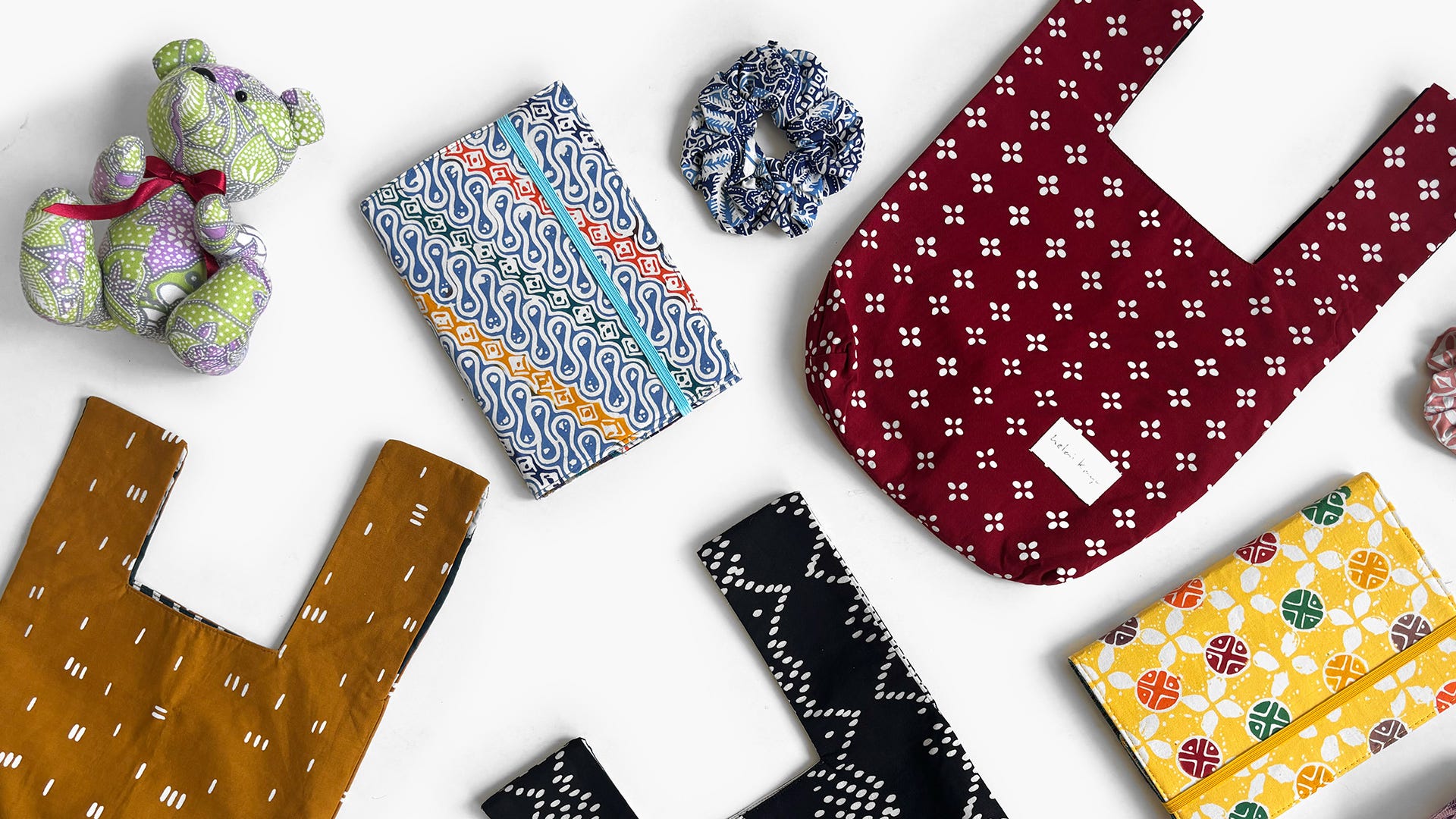
I launched a modern batik shop for kids to blend my design background with my Southeast Asian roots. My kids don’t speak Bahasa or Malay, so this was a way to give them that connection. It felt like the right combination of everything I cared about.
Is there something in what you built that you made specifically for your children, whether they know it yet or not?
It started with my son’s preschool dress-up days. All the cultural outfits were cheap, fast fashion junk. I set up the shop to solve that problem for him. But then I discovered something unexpected: I loved building this. It showed me what fulfilling work could be manageable—spending as little as ten minutes a day or long hours over a weekend working on your project. But I’ve learned to be ruthless about what matters and prioritize. Over time, it compounds into something meaningful.
When your children are old enough to look back at the choices you made, what do you hope they take from it?
That your self-worth is not tied to your productivity or achievements. Being a good person is about building your confidence, nurturing relationships, finding meaning in your work and trying new things. Not everything in life has to have a measurable outcome.
Singapore specifically
Raising children in Singapore comes with its own particular pressures. What is one thing you wish you had given yourself more permission to do?
Let them be kids. The only results you should measure is: were they better than they were last year? That’s the only result that should matter but unfortunately that’s now how it works here. Raising kids in Singapore is different from how I was raised in Australia. We had no homework. I didn’t have exams until I was in grade 9 and I turned out ok (I hope). For this generation on social media it’s chaos. There’s too much literature out there. I get FOMO watching other kids hit milestones mine haven’t. But I’ve learned: just try things and see what works. You can always change your mind. And as much as I love them, honestly, my kids are extremely average. And that’s okay.
What you have learned
What has your child taught you that no colleague, mentor, or book ever did?
To love someone so unconditionally that it hurts. Before you become a parent, you’re the centre of your own universe. But the minute a child grows inside you, your life and choices become bigger than yourself. Your kids can be absolute sh*ts and you’ll still worship them. Parents, you understand this dilemma.
What is one thing you do to teach your child to be kind?
My son is seven and pushes boundaries at the playground. Boys have a lot of physical energy and use rough play to socialise. Nothing wrong with that. We just guide it, teaching acceptable behaviour and how to manage emotions when things get intense.
My daughter is the opposite. She’s extremely sensitive and shy. She doesn’t need reminding to be kind to others. She needs reminding to be kind to herself, to stand up for herself.
You can’t force kindness into kids. You can only model it and hope they see it. Slowly, they start taking your lessons into consideration when you least expect it.
What is one piece of advice you wish someone had shared with you earlier in this season of life?
Oh, so many. I feel like there’s too much advice being thrown around. Sometimes the best thing you can do is just be. Just do. Then learn from it.
And finally
What do you cook when you want to show your child you love them? Recipes welcome.
Korean seaweed soup is the ultimate comfort food in our house.
What is one thing in your bag you never fail to have on hand when you bring your children out?
Water bottles and tissues! Singapore is so hot.
If you had one hour to yourself this week, what would you do with it?
A massage and a meal with my husband! One hour well spent to recharge and come out a better person.
And finally, what is in your cup right now?
A hot latte. Or three lattes. After becoming a parent I can have 3-4 coffees a day and I still conk out at night.
What stays with me about this conversation is that Jillian is doing two things at the same time.
She is giving her kids a way to reach back to where she and Kin came from, and she is also showing them what it looks like to build something of your own.
She said she hopes they learn that self-worth is not tied to productivity. I’ve been caught up in the 996 narrative working in startups for years, and I have to admit that as a parent now, it’s just not possible to sustain that. She also realised a very real and painful truth, no one doing the core work of that agency was a mother. You can replace “agency” with many other industries, and that’s the hard truth. And that’s what I admire about Jillian and other mums I’ve interviewed, after they came to that realisation, they’ve taken things into their own hands, literally.
People who grew up rooted in one place tend to inherit their heritage almost without noticing it (ie me). People who grew up between places have to choose theirs. Jillian is choosing batik. She wants it to be something her kids can hold, and something she can build with her own hands and turn her design eye to. She is making it between school runs and sourcing trips, in pieces. It’s growing because she kept showing up to the next ten orders, then the next fifty.
Jillian said she needs a hot latte to get through the day. Underneath that latte is something quieter, the conviction of a third culture kid who took the long way to Singapore and is using everything she gathered along the way to give her children, and herself, something beautiful to belong to.
A Cup With is a series on Cup & Weekend where I ask mothers who are building lives outside the template about what they carry, what they’ve made, and what’s in their cup. These conversations happen over text and emails, sometimes over coffee, and always between an errand run or two. If you’d like to follow along, subscribe below.
🍵 “More from A Cup With” ☕
A Cup With Cass

I’ve known Cass for years. Singapore is small enough that paths cross more than once if you stay in the same orbit, and ours did, going back to her Foodpanda days. Later, when she was made redundant from a tech role in 2023 and started her own fractional marketing agency, I had the chance to work with her team on a few campaigns. That’s where I really s…
A Cup With Sam

I met Sam in 2019, when I was a new mum still finding my feet. I had reached out to her looking for a coach, without being fully sure what I was actually looking for. I just knew I felt off. The work self I used to recognise had got wrapped around a very small person, and I couldn’t work out who I was inside the new shape.
A Cup With Xinnie

Some people make things for a living. Xinnie is one of them. She is an illustrative designer, and she and her husband, both trained as industrial designers, run a studio called Issho Labo together. When their son was born, they made a lamp inspired by him.
A Cup With Wei Ting

Entering Wei Ting’s home, you’d spot a coffee corner. For someone like me, whose utilitarian tastes meant that coffee was just at best a Nespresso machine (it still is!), her coffee corner was a revelation, a proper espresso machine with nice glasses and cups, all neatly arranged. Of course, we all wanted to have a nice cuppa.